01
Consultation
Your court. Your priorities.
Tell us where you want to play, who the court is for, and what you have in mind.
Know what happens next. A thoughtful sequence keeps the project focused from the first conversation through the final walkthrough.
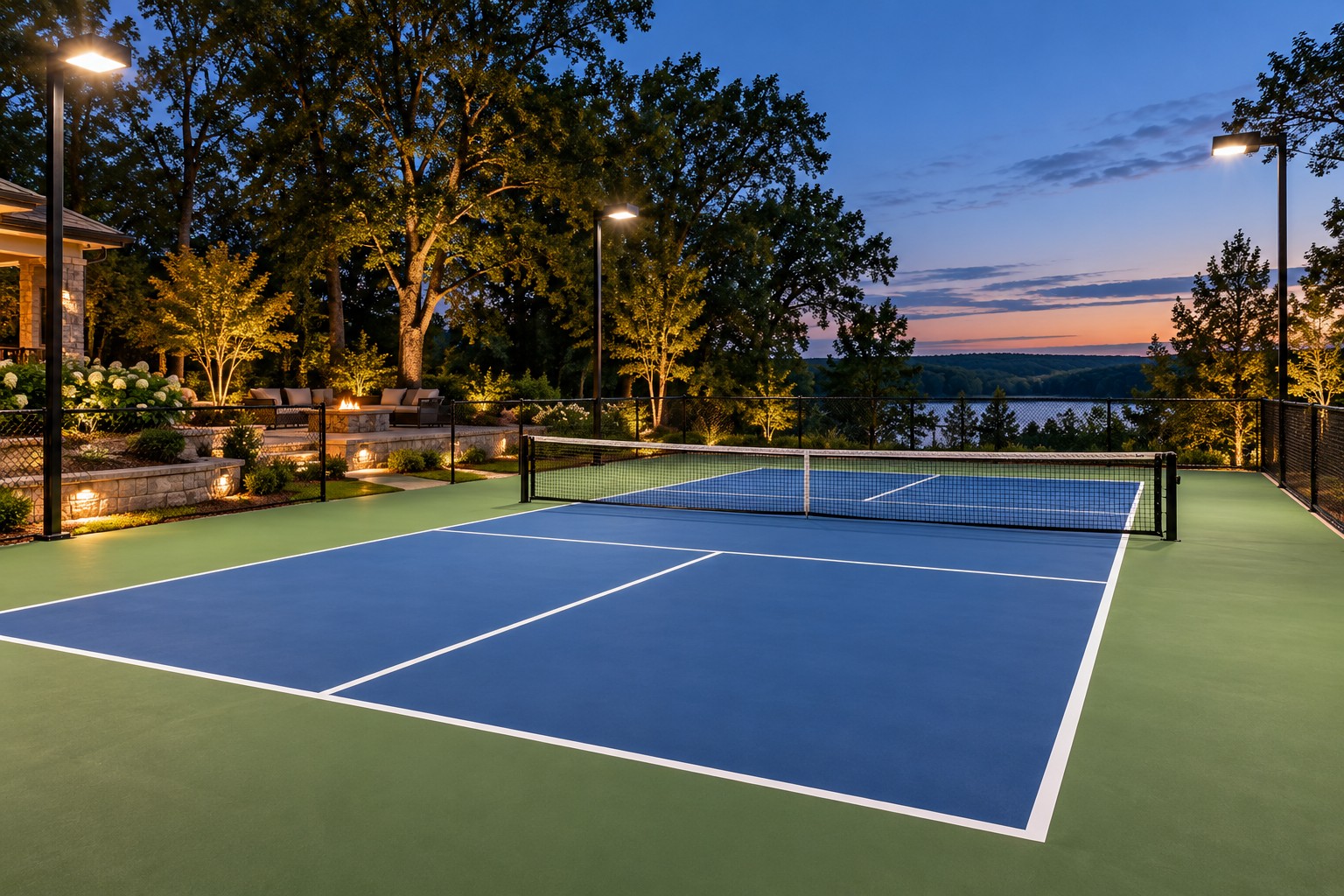
Tell us where you want to play, who the court is for, and what you have in mind.
Review access, available space, slopes, drainage, and local requirements before defining the scope.
Choose the surface, colors, fencing, lighting, and upgrades. Review a written scope, budget, and schedule.
Coordinate grading, drainage, underground work, and base preparation around the site-specific design.
Build the pavement, allow the required curing time, then complete court coatings, lines, and equipment.
Review the completed scope, care instructions, and remaining details together.
Coatings can make a court beautiful. They cannot fix an unstable base or a poor drainage plan. Those decisions belong at the beginning.
Plan runoff and surrounding grades before the pavement goes in.
Evaluate the ground and prepare it for the selected pavement system.
Respect the pavement and coating manufacturer’s requirements.
The total depends on access, grading, drainage, pavement, fencing, lighting, and the features you select. A site review and written proposal establish the scope and price.
A 34′ × 64′ playing surface is a useful starting point for a new court, with additional land for fencing, drainage, and access. Your site layout should confirm the clearances needed for your intended use.
A conversion may be possible. The available area, surface condition, drainage, and whether tennis will remain in use determine the right approach.
Your schedule depends on the scope, approvals, site conditions, weather, and required pavement and coating cure times. Timing should be confirmed in the proposal.
Yes—discuss them during planning so foundations, electrical work, access, and local requirements can be coordinated with construction.
Tell us about your property.
Let’s explore what’s possible.